
I remember the first time I got slapped with a code violation like it was yesterday. I had this bright idea to turn my cramped garage into the ultimate man cave—complete with a bar, a pool table, and a sound system that could rattle the windows of the next county. Armed with a toolbox and more ambition than sense, I figured I’d save a few bucks by doing the electrical work myself. Spoiler alert: When the inspector came around, he didn’t quite share my enthusiasm for the “creative” wiring job I’d cobbled together. Turns out, what I thought was a minor oversight was more like a neon sign screaming, “Fire hazard!” Lesson learned—the hard way.
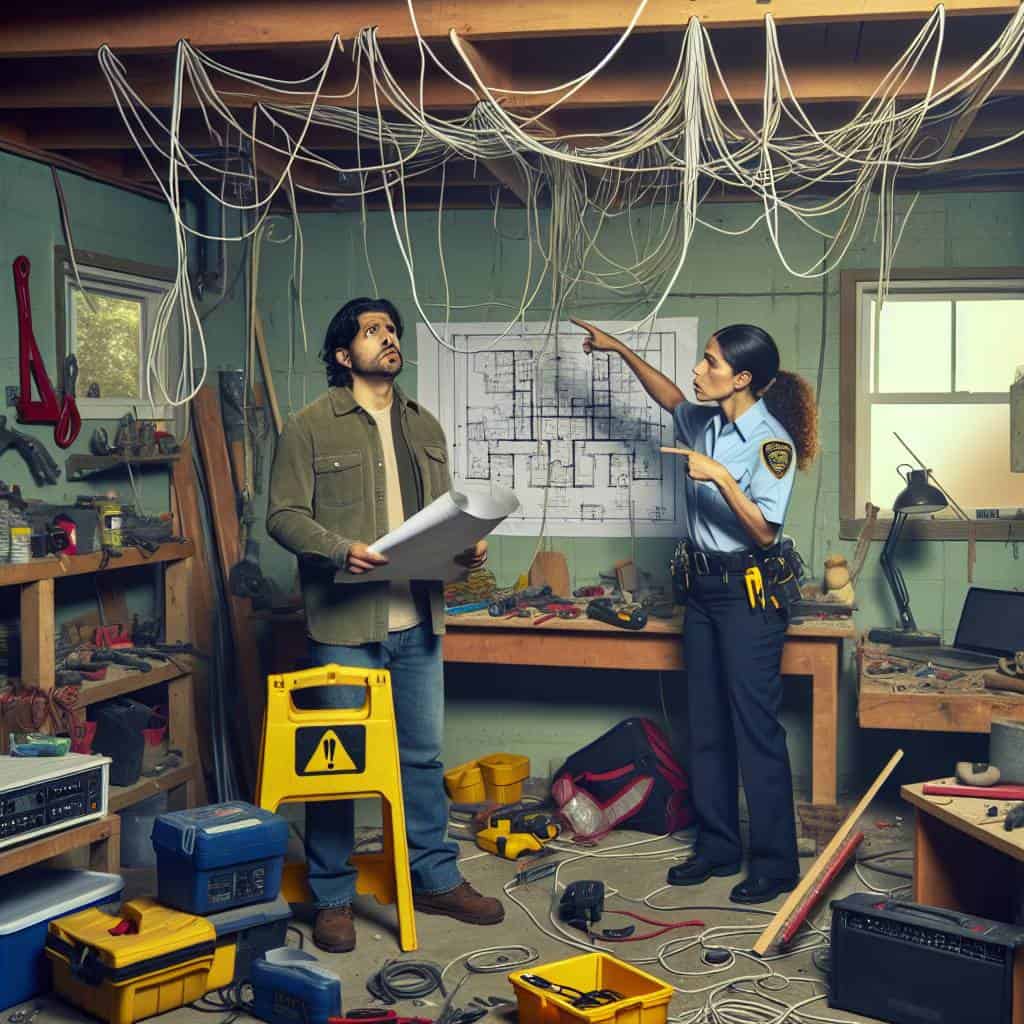
So, let’s make a pact right here, right now. You and me, we’re gonna dive into the nitty-gritty of avoiding those pesky code violations that can turn your DIY dreams into a bureaucratic nightmare. We’ll talk about why your plumbing project might be more water park than functional, and why that new addition could turn your house into a lean-to if you’re not careful. Whether you’re remodeling your kitchen or just trying to hang a shelf, we’ll get into the nuts and bolts of building and safety codes. Believe me, this isn’t just about keeping the inspector off your back—it’s about making sure your projects hold up better than my first attempt at a man cave.
Table of Contents
How My Ill-Advised DIY Adventure Nearly Became a Plumbing Catastrophe
There I was, standing knee-deep in what can only be described as a swamp that used to be my basement. It all started because I fancied myself some sort of plumbing savant after watching a couple of online tutorials. Those smooth-talking YouTubers made it seem like swapping out an old pipe was as easy as changing a tire. Spoiler alert: it’s not. One minute, I was just tightening a valve, feeling like Bob Vila, and the next, it was like I’d struck oil, but not the good kind. Water was gushing out faster than you can say “code violation.”
Here’s the kicker: I didn’t even think to check the local plumbing codes, which, as it turns out, are important if you want to avoid turning your home into a water park. I’d ignored the golden rule of DIY—know the rules before breaking the house. The pipe I chose wasn’t rated for the pressure, and my haphazard installation was a ticking time bomb. I learned the hard way that there’s a reason plumbers have licenses. They understand the nuances of pipe diameters and water pressure that I, in my hubris, had completely overlooked. And they don’t just wing it and hope for the best like I did.
In the end, I had to call in a pro to fix my mess, which cost me more than if I’d just started with them in the first place. Lesson learned: sometimes, the best way to keep your DIY dreams from turning into nightmares is to respect the expertise behind that certificate on the wall. So, if you’re thinking about going rogue with your plumbing, take it from me—don’t. Unless you enjoy the thrill of impending disaster and paying for it in both pride and dollars.
The DIY Danger Zone
Tackle your home projects like a seasoned mechanic—know where the bolts go and when to call in the pros, or you might just end up with a house that’s one spark away from a bonfire.
When Codes Become Your Unexpected Best Friend
In the end, this dance with DIY and the ever-watchful eye of building codes taught me more than just how to avoid a hefty fine. It showed me that these codes aren’t just bureaucratic hurdles meant to trip me up. They’re like that grizzled old mechanic who knows every inch of a carburetor without needing a manual. They’re there to ensure that when you flip that light switch, you aren’t also lighting up the night sky with sparks. And maybe, just maybe, they keep us from turning our homes into elaborate fire hazards.
So next time I get the itch to grab a wrench or a roll of solder wire, I’ll remember the lessons learned. I’ll treat those regulations like an old friend who’s got my back—one who knows a hell of a lot more about keeping things running smoothly than I ever will. Because at the end of the day, I’d rather have a house that stands the test of time than one that crumbles under the weight of my own stubbornness. Just like an engine, sometimes you need a little outside expertise to keep everything in tune.
