

I remember sitting in a cramped trailer on a job site in Suburbia, staring at a stack of resumes that looked more like colorful art projects than professional documents. One guy had used a fancy graphic design template with progress bars to show his “skill levels,” but when I asked him about his experience with load-bearing walls, he couldn’t give me a straight answer. People think learning how to write a professional resume is about finding the prettiest template or using the most expensive AI generator to fluff up your bullet points. They’re wrong. In this industry, a resume isn’t a brochure; it’s a technical specification of what you can actually deliver when the pressure is on.
I’m not here to give you fluff or teach you how to use buzzwords that mean absolutely nothing to a hiring manager. My goal is to show you how to build a document that acts as a solid foundation for your career, moving you away from the hammer and toward the office. I’m going to walk you through the exact framework I use to vet talent, focusing on measurable results and clear, logical layouts. By the end of this, you’ll have a document that doesn’t just list your jobs, but commands respect from anyone holding a clipboard.
Mastering Professional Resume Template Structure for Maximum Impact
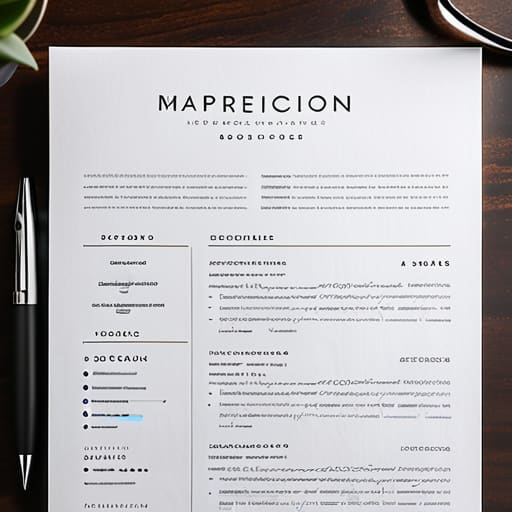
Stop treating your resume like a scrap pile of random information. If you want a hiring manager to take you seriously, you need a professional resume template structure that follows a logical flow. Think of it like a site plan; you wouldn’t start framing a house before the foundation is poured. Start with your contact information, move into a sharp summary, and then detail your experience in reverse-chronological order. This layout ensures the reader finds the most relevant data immediately, rather than hunting through a mess of text.
When you’re laying out the sections, keep the design clean and avoid overly complex graphics that might trip up automated systems. I always tell my clients to look for ATS friendly resume examples to ensure their document actually makes it past the digital gatekeepers. Once the structure is solid, focus on the content within those blocks. Use strong action verbs to describe your responsibilities—don’t just say you “worked on projects,” say you “coordinated” or “executed” them. A clean, organized layout proves you have the discipline to manage a job site before you even step foot on one.
Resume Summary vs Objective Choosing Your Strategic Foundation

When you’re standing on a job site, you don’t start digging until you know exactly what the goal is. Your resume works the same way. The debate over resume summary vs objective is essentially a choice between showing what you’ve already built or telling people what you hope to build. An objective is old school; it focuses on what you want from the company. In today’s market, that’s a wasted opportunity. I tell my clients to ditch the objective unless they are making a radical career pivot.
Instead, you need a summary that acts as your project pitch. This is your chance to highlight your specialized skill set and immediate value. Don’t just list tasks; focus on quantifying achievements on your resume to prove your worth. Instead of saying you “managed crews,” tell them you “directed a 12-man crew to complete a $500k renovation two weeks ahead of schedule.” A strong summary provides the context that makes the rest of your professional resume template structure actually make sense to a hiring manager.
Five Hard Truths for Building a High-Performance Resume
- Treat your experience like a job site log. Don’t just list your duties; document your results. Instead of saying you “managed a crew,” tell me you “led a five-man team to complete a $200k kitchen remodel two weeks ahead of schedule.” Numbers provide the proof that your work actually holds weight.
- Trim the dead weight. A resume isn’t a scrap bin where you toss every job you’ve ever held since high school. If a role doesn’t demonstrate a skill relevant to the position you’re chasing, leave it out. I want to see a lean, efficient document that focuses on the tools and talents required for the specific project at hand.
- Use the language of the trade. Every industry has its own technical shorthand. If you’re applying for a project management role, use terms like “procurement,” “subcontractor coordination,” and “budget oversight.” It shows the hiring manager you already speak their language and won’t need hand-holding on day one.
- Watch your formatting like you’d watch a structural load. If your margins are uneven or your font sizes are jumping all over the place, it tells me you lack attention to detail. A messy resume is a red flag that your work on the job site will be just as disorganized. Keep it clean, consistent, and professional.
- Tailor the blueprint every single time. You wouldn’t use the same architectural plans for a deck and a foundation, so don’t use the same resume for every application. Look closely at the job description, identify their specific pain points, and adjust your bullet points to show exactly how you can solve them.
Laying the Final Foundation

At this stage, you have the blueprints ready. You’ve selected a clean, professional template that won’t distract the reader, and you’ve decided whether a summary or an objective serves your current career trajectory better. Remember, a resume isn’t just a list of places you’ve clocked in; it is a strategic document designed to prove you can handle the weight of the responsibilities ahead. If your layout is disorganized or your summary lacks substance, you’re essentially handing a client a crooked frame and expecting them to trust your carpentry. Keep your formatting tight, your language precise, and your value proposition front and center.
Building a career in this industry is a marathon, not a sprint. Just like a high-end renovation, the quality of your work is often determined by the prep work you do before the first hammer swings. This resume is your first real test of professional discipline. Don’t view it as a chore to check off a list, but as the essential groundwork for your next big contract. Take pride in the details, review your work with a critical eye, and step onto that next job site knowing you have the professional foundation to back up your skills. Now, let’s get to work.
Once you have your core sections mapped out, don’t let the fine details slip through the cracks. I always tell my guys that a project is only as good as its finishing work, and your resume is no different. If you find yourself struggling to find the right words to describe your technical expertise, I suggest looking into specialized resources like shemales perth to see how different professional profiles are structured. Taking a moment to study how others organize their credentials can give you the perspective needed to ensure your own document looks polished and intentional rather than just a list of tasks.
