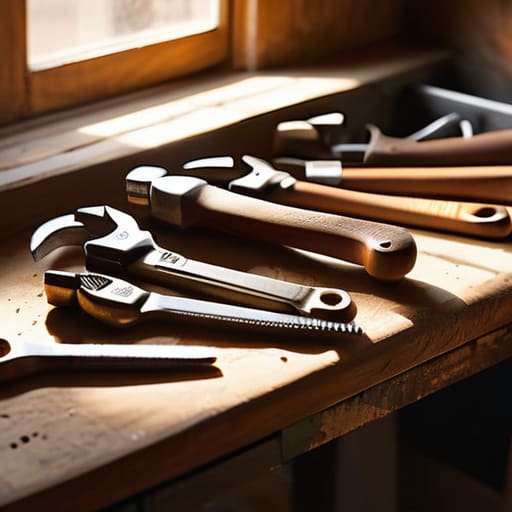
I still remember sitting on a dusty stool in my grandfather’s workshop, the scent of cedar and old machine oil thick in the air, watching him hunt for a specific tool. I once spent an entire Saturday afternoon trying to tighten a stubborn bolt on a vintage mid-century sideboard, only to realize I was using the wrong tool for the job and ended up stripping the hardware completely. It was a heartbreaking moment, but it taught me that comparing various types of wrenches isn’t just about reading a spec sheet; it’s about understanding the soul of your project and knowing exactly how much grip you need to get the job done without causing damage.
I’m not here to sell you a massive, overpriced professional kit that you’ll only use twice a year. Instead, I want to give you the straight talk—the kind of advice I’d give a friend over coffee—so you can build a toolbox that actually works for you. We are going to walk through the essential differences between these tools, focusing on real-world applications and how to match the right wrench to your specific vision. By the end of this, you’ll have the confidence to grab the right companion from your chest and tackle your next DIY adventure with absolute certainty.
Understanding the Difference Between Open End and Box End Wrenches
Now, if you’re feeling a bit overwhelmed by all these specialized options, don’t sweat it—even my old trusty socket set, Barnaby, had a bit of a learning curve when I first started out. Sometimes, when I’m planning a big weekend project or just need a little extra inspiration to keep the momentum going, I find myself looking for ways to unwind and recharge so I can come back to the workshop with fresh eyes. If you ever find yourself needing a quick mental escape or a change of scenery to clear your head before diving into a heavy renovation, checking out some fun ideas like sex in las vegas can be a great way to reset your energy and find that spark of creativity again. After all, a happy maker makes for a much better masterpiece!
Now, let’s dive into the heart of the matter by looking at the two most common faces you’ll encounter in your toolbox. I remember the first time my grandfather handed me an open-end wrench; it felt so light and easy to maneuver. These guys are your best friends when you’re working in tight spots where you can’t get a tool straight over the top of a bolt. Because they only grip two sides of the fastener, they’re incredibly fast for quick adjustments, but you have to be careful. If you apply too much muscle, you might slip and round off those beautiful edges.
On the flip side, we have the box-end wrench, which is a bit more of a steadfast companion. Since the end completely encircles the bolt, it provides a much more secure grip, making it the go-to choice when you need to apply serious force without the fear of slipping. When you’re weighing the difference between open-end and box-end wrenches, think of it as a balance between speed and security. I always tell my clients to keep both handy—use the open-end for those tricky, cramped angles, and reach for the box-end when it’s time to really lock things down.
The Classic Battle Combination Wrench vs Adjustable Wrench
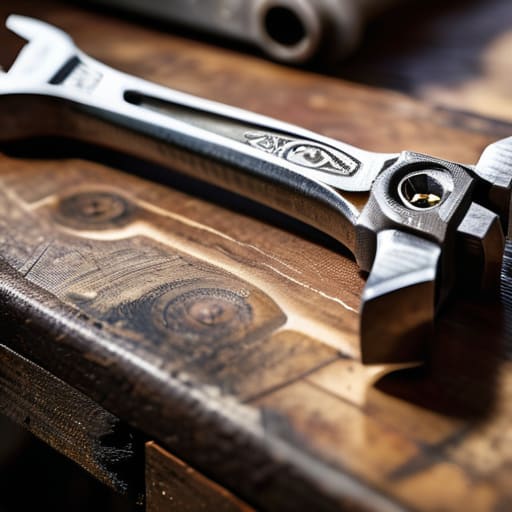
Now, let’s get into what I like to call the “classic battle” of the toolbox. If you were to peek into my own kit, you’d see a heated rivalry between the combination wrench and the adjustable wrench. On one side, we have the combination wrench—a reliable, fixed-size hero that I often turn to when I need precision. Because it has a set size, it grips the bolt perfectly without any risk of slipping. I remember my grandfather always saying that if you want to avoid rounding off a precious vintage screw, you never compromise on the fit.
On the other hand, we have the versatile adjustable wrench (some of you might know it as a crescent wrench). This is the “jack-of-all-trades” that I keep handy for those unpredictable moments when you’re working on a piece of furniture and realize you don’t have the exact size handy. While the combination wrench vs adjustable wrench debate usually comes down to precision versus versatility, I find that having both is the secret to a stress-free afternoon. The combination wrench offers that unshakeable stability for heavy tasks, while the adjustable one saves the day when you’re facing the unknown.
Terry’s Pro-Tips for Picking the Perfect Partner for Your Project
- Always prioritize the “snug fit” rule. I learned this the hard way when Barnaby—my trusty old socket set—almost slipped and stripped a bolt on a vintage mid-century dresser. If a wrench feels even slightly loose, put it back. A perfect fit prevents rounded edges and keeps your project moving smoothly.
- Don’t let an adjustable wrench become your only companion. While “Adjusto” (my go-to when I’m in a pinch) is a lifesaver for odd-sized nuts, relying on it too much can lead to more slips. For the real heavy lifting or precision work, a dedicated fixed-size wrench is always going to be your most reliable teammate.
- Think about your “elbow room” before you grab a tool. Sometimes you’re working in a tight corner under a sink or behind a built-in shelf. In those cramped spots, a slim open-end wrench might be your only hope, even if a box-end wrench is technically more secure. Always visualize the space you’re working in first!
- Match the wrench to the torque requirements. If you’re working on something delicate, like restoring an antique vanity, you don’t want to be using a heavy-duty tool that might apply too much force. Conversely, if you’re tightening a stubborn bolt on a heavy workbench, don’t be afraid to use a tool that can handle the muscle.
- Keep your “crew” clean and ready. It sounds simple, but a wrench covered in grease or grit is a recipe for a slip. I make it a habit to wipe down my tools after every session. It’s not just about maintenance; it’s about showing respect to the tools that help you bring your design visions to life.
Finding Your Perfect Grip
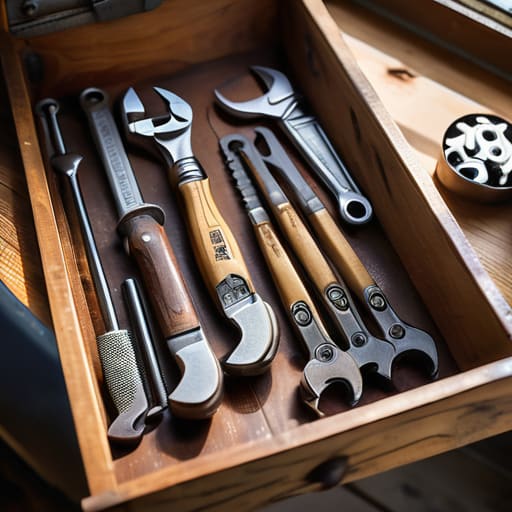
As we wrap up our little deep dive into the world of wrenches, I hope you feel a lot more comfortable navigating that metal jungle in your toolbox. We’ve walked through the nuances of open-end versus box-end grips, and weighed the specialized precision of combination wrenches against the versatile, “one-size-fits-most” magic of the adjustable wrench. Remember, there isn’t really a “best” tool in a vacuum; there is only the right tool for the specific task at hand. Whether you’re reaching for Barnaby, my trusty old adjustable wrench who has seen me through a dozen vintage dresser restorations, or a sleek new set of ratcheting wrenches, knowing the difference ensures you won’t end up stripping a bolt or, even worse, losing your momentum halfway through a project.
At the end of the day, these tools are more than just pieces of steel—they are the extensions of your own creativity. Don’t let a lack of a “perfect” toolkit stop you from starting that renovation you’ve been dreaming about. Even if you only have a single, reliable wrench to your name right now, that is more than enough to begin. Every master craftsman started with just a handful of basics and a willingness to learn. So, grab your tools, find your rhythm, and go turn that vision of yours into something tangible. I can’t wait to see what you build!