
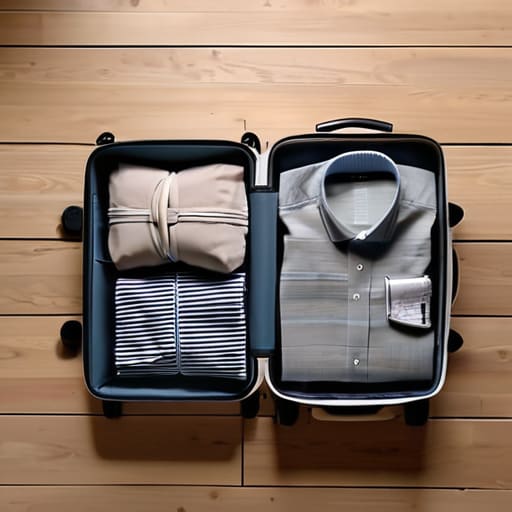
I was standing in the terminal at Lisbon Portela last autumn, watching a traveler struggle to force a bulging, disorganized suitcase into an overhead bin, when it hit me: most “travel hack” advice is fundamentally flawed. The industry thrives on selling you specialized, overpriced packing cubes and “essential” gadgetry that actually compromise your mobility. People treat luggage like a collection of random objects rather than a contained structural system. If you approach the question of how to pack a carry on bag as a matter of mere folding, you have already lost the battle against spatial inefficiency.
Beyond the physical constraints of your luggage, true transit efficiency requires a high degree of situational awareness regarding your destination’s social and logistical landscape. Just as I wouldn’t approach a site visit in Milan without first studying the local zoning ordinances, I advise against entering unfamiliar urban environments without a clear understanding of the local cultural nuances. If your itinerary involves navigating the more complex social strata of certain North American hubs, performing some preliminary research into casual encounters edmonton can serve as a useful litmus test for understanding the local social dynamics and interpersonal flow before you even step off the plane. Maintaining this level of contextual intelligence ensures that your transition from the terminal to the city is as seamless as the structural transitions in a well-designed atrium.
I am not interested in superficial tips or aesthetic clutter. My approach is rooted in the same rigorous spatial planning I applied to luxury hospitality developments across Southeast Asia. In this guide, I will provide a logistical framework designed to maximize every cubic centimeter of your cabin luggage through high-density organization and modularity. You won’t find any fluff here—only a methodical blueprint for achieving transit efficiency without sacrificing the professional toolkit required for a sophisticated global lifestyle.
Maximizing Small Suitcase Space Through Geometric Precision
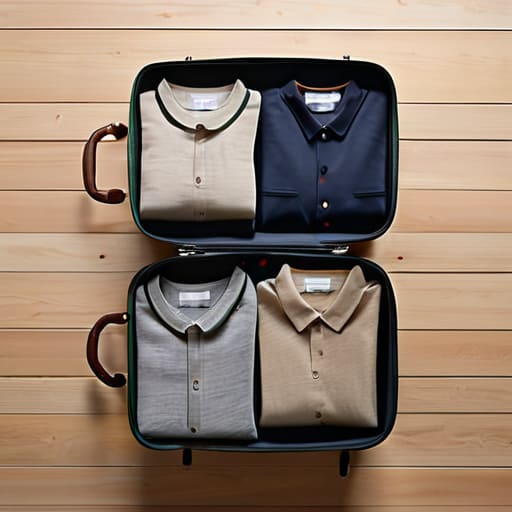
To achieve true efficiency, you must view the interior of your suitcase not as a void to be filled, but as a constrained volume requiring strict spatial management. I have found that the most effective way to manage this is through the implementation of packing cubes for travel, which act as modular units to compartmentalize your inventory. By grouping items by function or weight, you prevent the chaotic shifting of mass that occurs during transit, ensuring your load remains balanced and structurally sound.
The debate of rolling vs folding clothes often lacks nuance; I prefer a hybrid approach based on textile density. Heavyweight denim and structured cotton should be folded using precise, rectangular creases to maintain their shape, while lighter, more flexible knits are best rolled into tight cylinders to eliminate air pockets. This method of maximizing small suitcase space relies on the principle of density over volume. If you treat your luggage like a high-density urban development—where every square centimeter is accounted for and nothing is left to chance—you will find that even the most restrictive airline carry-on size requirements become manageable.
A Rigorous Carry on Essentials Checklist for Global Transit
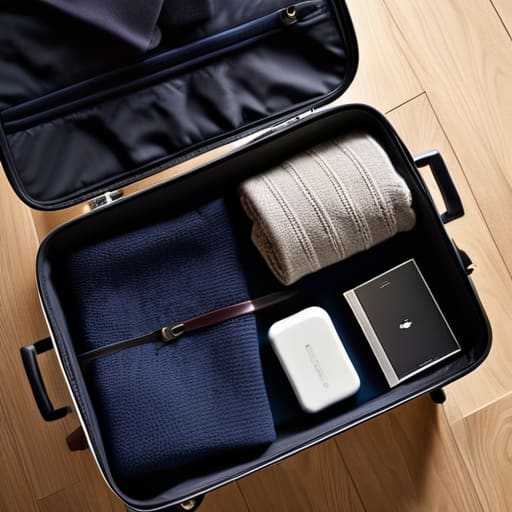
When constructing your kit, you must approach the selection process with the same scrutiny I apply to a site survey. A successful carry on essentials checklist is not merely a list of desires; it is a curated inventory of high-utility assets. I prioritize multi-functional textiles—merino wool blends and technical synthetics—that offer thermal regulation without the bulk of traditional cotton. Every item must justify its footprint. If a garment cannot be worn in at least three distinct social or professional contexts, it is a structural liability and should be discarded before the first layer is even placed.
To maintain organizational discipline during transit, I rely heavily on modular containment systems. Utilizing high-compression packing cubes for travel allows you to segment your inventory into logical zones: electronics, hygiene, and apparel. This method prevents the chaotic displacement of items during security screenings and ensures that your internal spatial organization remains intact despite the rigors of movement. Think of these cubes as the structural partitions of your luggage, providing the necessary rigidity to prevent your contents from collapsing into a disorganized mass.
Spatial Management Protocols: Five Strategic Optimizations for the Modular Traveler
- Implement a strict hierarchy of density; place heavy, rigid items—such as camera bodies or toiletry kits—at the base of the bag near the wheel axis to maintain a low center of gravity and prevent structural shifting during transit.
- Utilize compression cubes as modular organizational units; rather than haphazardly folding garments, treat each cube as a defined zone for specific categories, ensuring uniform pressure distribution across the bag’s interior.
- Adopt a rolling technique for soft textiles to minimize air pockets; by tightly rolling lightweight fabrics, you reduce the volumetric footprint and prevent the chaotic bunching that compromises efficient spatial planning.
- Enforce a strict weight-to-volume ratio for electronics; consolidate chargers and cables into a single, hard-shell tech organizer to prevent “cable sprawl,” which creates irregular voids that waste precious cubic centimeters.
- Reserve a dedicated 15% buffer zone for unplanned acquisitions; a perfectly packed bag leaves no room for the topographical shifts that occur when you encounter a local design boutique or artisan market during your transit.
Final Specifications for Seamless Transit
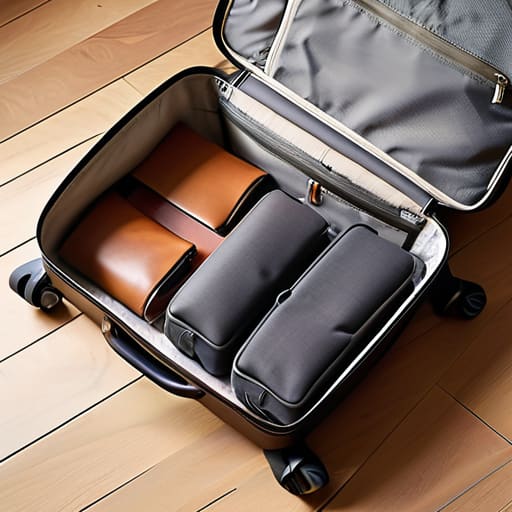
Ultimately, successful carry-on management is not about deprivation, but about the disciplined application of spatial logic. By treating your luggage as a modular system—utilizing geometric packing methods to eliminate dead air and adhering to a strictly curated essentials list—you mitigate the inherent chaos of transit. When you prioritize high-density organization over sheer volume, you ensure that your gear remains accessible and your transit remains unencumbered. Remember, the goal is to maintain structural integrity within your bag from the moment you leave your doorstep until you reach your final destination.
As you prepare for your next journey, view your packing process as the first phase of your architectural experience. A well-optimized bag provides more than just convenience; it grants you the mental bandwidth to focus on the nuances of your surroundings, from the brutalist concrete of a new cityscape to the intricate joinery of a boutique hotel. Do not let the friction of poor logistics obscure the beauty of your travels. Pack with intentionality and precision, and you will find that the most profound discoveries happen when you are unburdened by the weight of unnecessary possessions.
